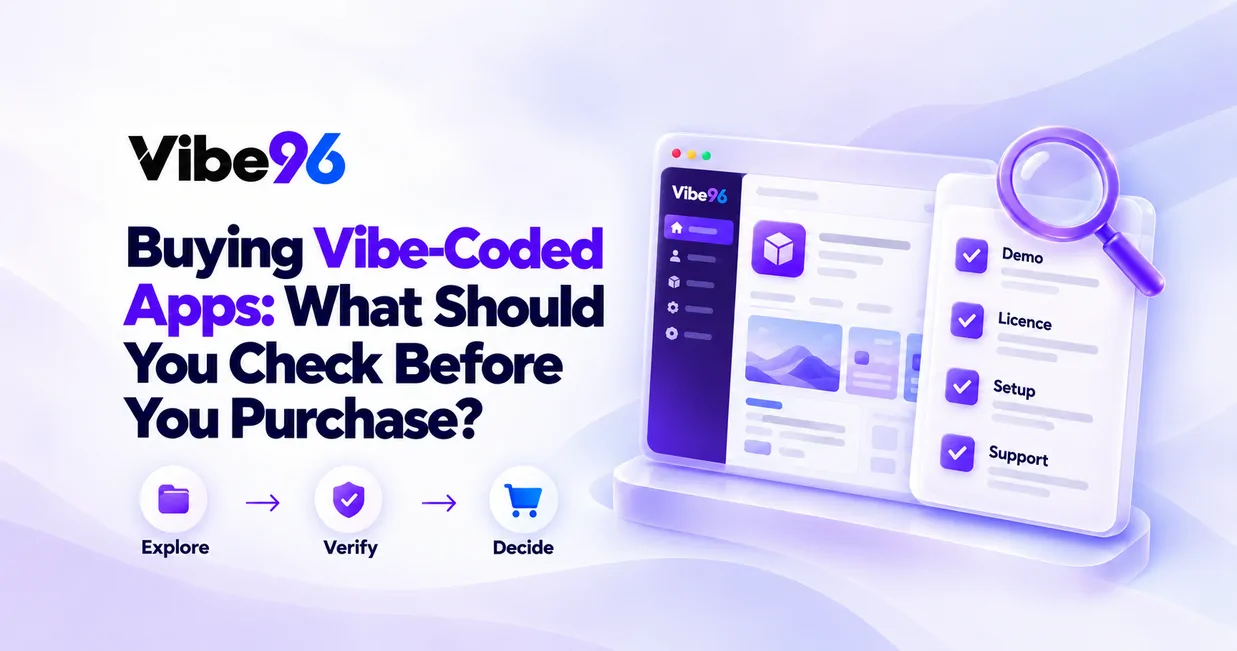
A listing that looks polished in its screenshots can still hide real problems underneath. Before paying for any AI-built project, it helps to have a consistent list of what to check before buying source code, rather than relying on how professional the demo looks or how confident the description sounds.
This matters more, not less, when the code was generated by an AI coding tool, since the usual signals of an experienced developer's judgment are not necessarily present in the output the way they might be in a traditionally built application.
Treat this the way you would treat due diligence on any purchase with real downstream cost if it goes wrong, because that is exactly what it is, whether the price tag is fifty dollars or several thousand. A ten minute check before paying is almost always cheaper than discovering a problem after the project is already wired into your business.
Start with the audit score
Most reputable marketplaces run some form of AI code audit service against every listing before it goes live, checking for exposed secrets, vulnerable dependencies, and access control issues. The score itself is a starting point, not a guarantee, but a listing with no audit information at all should raise more questions than one with a documented, if imperfect, review history that you can actually read through.
Read what the review actually found
A score alone does not tell you much. Reading the actual findings tells you whether the issues flagged were minor, such as outdated dependency versions, or more serious, such as missing authorization checks. Is it safe to buy AI generated code with open findings still listed. Sometimes yes, if the findings are low severity and clearly explained, and sometimes no, if they touch authentication or payment handling directly, so the specifics matter far more than the headline score.
Check the stack and your ability to maintain it
A well-reviewed project built on a stack nobody on your team, or your AI coding tool of choice, can comfortably work with is still a poor purchase. Confirm the language, framework and database before buying, not after, and check whether the listing documents how to run it locally and deploy it, rather than leaving that to guesswork once you already own the code and cannot get a refund.
Confirm the licence terms
Buying software with source code included does not automatically mean unlimited rights to resell or redistribute it. Most listings carry a single-site licence, meaning you can use and modify the code for your own project but not resell the original as your own product elsewhere. Read this before purchase, particularly if the plan is to use the code as the base for something you intend to sell yourself down the line.
Ask about hosting and support
Some listings include a support period after purchase, others do not. Hosting is almost always separate. Knowing this upfront avoids the surprise of a working codebase with no clear path to getting it live, or no answer when a bug shows up in week two, right when you need the original seller most.
Look at how actively the project is maintained
A changelog or version history tells you whether a project is still being improved or was listed once and left alone. This matters less for a one-time internal tool, and more for anything you expect to run for years, where dependency updates and the occasional bug fix are part of normal, healthy software ownership rather than a red flag on their own. A listing that has not been touched since it first went live is not automatically a bad purchase, but it does mean you should plan on handling maintenance yourself from day one rather than expecting the original seller to.
A quick pre-purchase checklist
• Audit score and the specific findings behind it
• Stack, and whether it fits your team or AI coding tool
• Licence type, single-site or broader
• Support period and what it covers
• Whether hosting is included or needs to be arranged separately
• How recently the project was updated
Questions worth asking the seller directly
If a listing's page does not already answer these, it is worth asking before paying:
• What specifically failed, if anything, during the audit, and has it since been fixed
• Is the live demo running the exact version being sold, or an older one
• Does the licence allow modification for internal use, and does it allow resale
• What happens if the application does not run from the documentation provided
A seller who answers these clearly and promptly is usually also a seller who stands behind the support window stated on the listing, which is worth noticing as a signal in its own right, separate from the audit score itself.
Buying from a marketplace that audits every listing
The fastest way to shortcut most of this checklist is to buy from a marketplace where the audit, stack details and licence terms are already shown on every listing page, rather than something you have to request from a seller and wait on.
Vibe96's Vibe Coded AI App Marketplace lists this information upfront for every project, which turns due diligence into a five-minute read rather than a back-and-forth negotiation before you can even decide whether to buy.
Buying a vibe-coded app is not meaningfully different from buying any other piece of software, except that the review step matters more, because the usual signals of developer judgment are not automatically present in AI-generated code. A short, consistent checklist applied before every purchase catches most of the problems that would otherwise surface after the money has already changed hands and the deadline has already arrived.