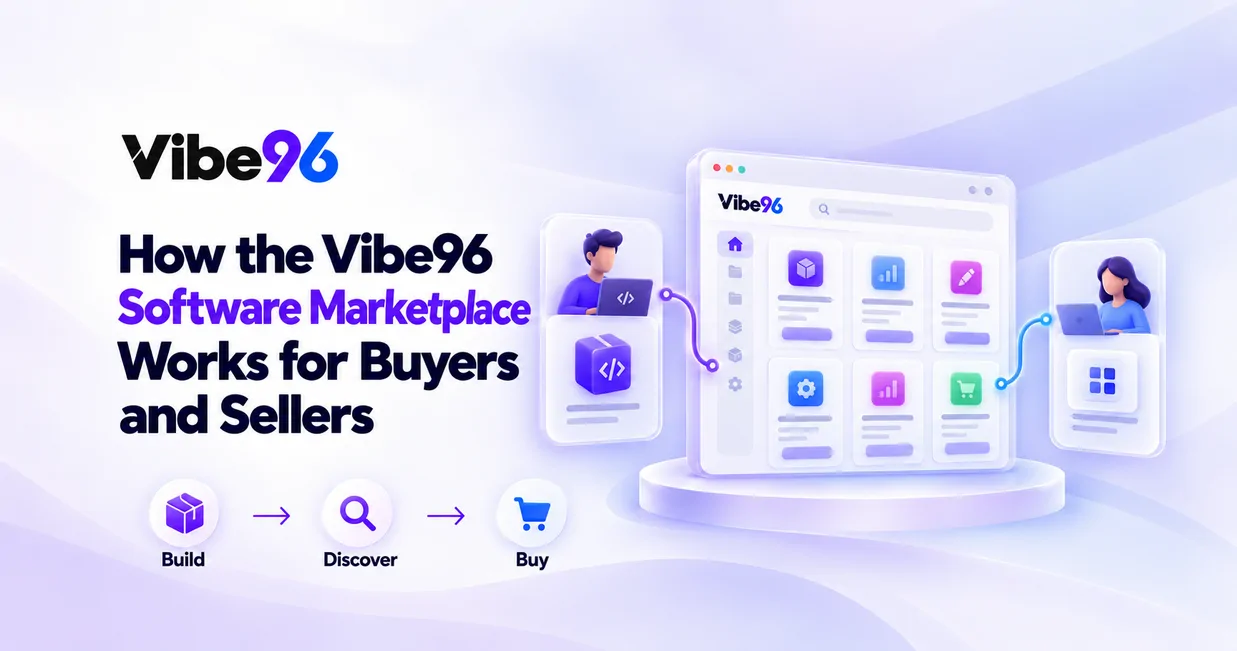
Most marketplaces are built around one side of a transaction, a place to shop or a place to list. An AI built software marketplace has to work for both sides at once, since the same audit, the same licence structure and the same payment rails have to hold up whether someone is buying a finished app or listing one they built with an AI coding tool.
Understanding how that two-sided system fits together makes it easier to use well, whether you showed up to buy or to sell.
This matters more here than on a typical marketplace, because the product being traded, AI generated source code, carries risks and questions that a physical good or a simple digital download does not. The structure described below is what keeps those risks manageable for both sides at once.
The buyer side: browsing, auditing and purchasing
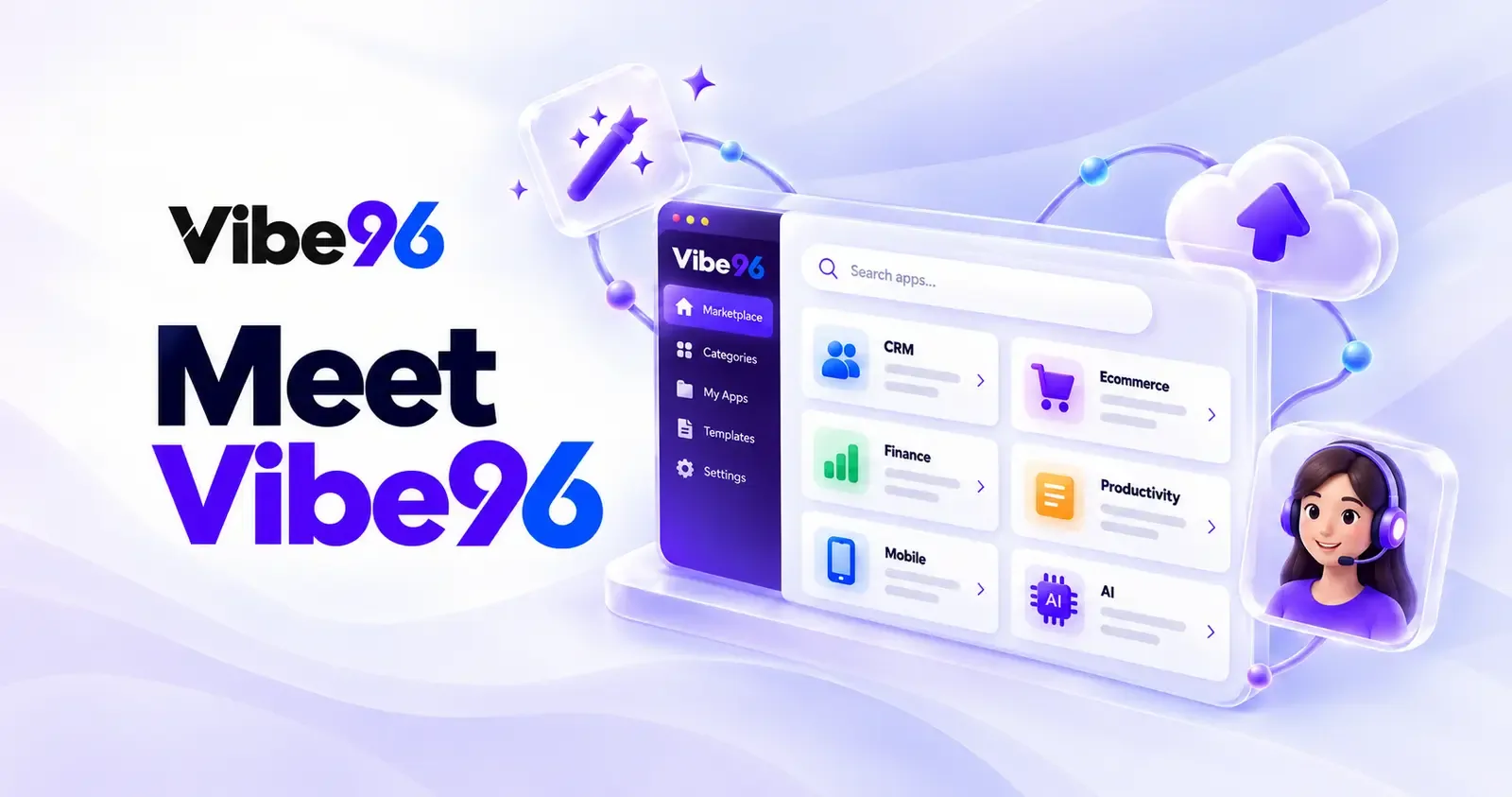
For a buyer, a vibe coding marketplace starts with categories: CRM, e-commerce, business operations, AI and automation, and so on. Each listing inside a category shows the stack it was built with, the AI coding tool used, and a review score from an audit run before the listing went live. Buying transfers the source code, a setup guide and a licence, and from there the buyer decides whether to deploy it as-is, customize it, or bring in a developer for anything more specialized.
The seller side: building, auditing and listing
For a seller, the marketplace works almost in reverse. A project that already exists, often something built during a client engagement or a personal experiment, gets submitted with its source, a live demo and documentation. It goes through the same audit a buyer would later see the results of, checking for exposed secrets, vulnerable dependencies and access control gaps. Only after it clears that bar does it become a public listing that buyers can find and purchase.
Why the same audit serves both sides
The audit is the mechanism that makes buying source code online something other than a gamble. For a buyer, it means not having to personally verify a stranger's codebase for basic security problems before paying. For a seller, it means a listing that passed review is worth more and attracts fewer disputes than one that was never checked, since the audit result becomes part of the pitch rather than a hidden risk.
What happens after a transaction on each side
A purchase sets off a different sequence of events for each party:
• The buyer receives source code, documentation and a licence, and can deploy, customize or request developer help from there
• The seller receives a payout on the next scheduled cycle, and remains expected to stay reachable for a support window
• Both sides can see the transaction and licence terms recorded against the listing, which keeps expectations clear if a dispute comes up later
This separation matters because it means neither side has to improvise. A buyer is not negotiating terms from scratch with a stranger, and a seller is not chasing payment manually after every sale. The structure is set before either party gets involved, which is a large part of what makes a marketplace faster than hiring a freelancer directly.
Licensing: the part both buyers and sellers need to understand
Most listings carry a single-site licence. For a buyer, that means the code can be used and modified for one project but not resold as-is elsewhere. For a seller, it means the same project can be sold to multiple buyers, since each sale is a separate licence rather than a transfer of exclusive ownership. Misunderstanding this from either side is one of the more common sources of friction on any software marketplace, which is why it is worth reading rather than assuming.
Hosting and expert help sit on top of the marketplace
Buying and selling cover the transaction itself, but most projects need more after that: somewhere to run, and occasionally a developer for the parts an AI coding tool should not be trusted with alone, such as a payment integration or a data migration. A marketplace that pairs listings with both of these closes the gap between owning the code and actually having something live.
For sellers, this layered structure also matters, because a buyer who can get their purchase hosted and running with the same platform is more likely to buy in the first place. A marketplace that only sells code and leaves everything after that to the buyer is asking them to solve a second problem alone, right after they have already solved the first one.
Where the two sides actually meet
The clearest way to see how this works end to end is to look at a live listing and trace it through: the audit score, the stack, the licence terms, and what a buyer gets immediately after paying.
Vibe96's Vibe Coded AI App Marketplace shows all of this on every listing page, which is the fastest way to understand the system by seeing it rather than reading about it abstractly.
Why this structure tends to outlast informal alternatives
Selling code informally, through a forum post or a direct message, works occasionally, but it leaves every protection described above to be negotiated manually each time. A structured marketplace exists precisely because that negotiation is tedious and error prone when repeated at scale, and because both buyers and sellers benefit from not having to reinvent trust from scratch on every single transaction.
Over time, this is also what builds a marketplace's reputation as a category. Buyers who have a good experience come back for their next purchase, and sellers who sell successfully once tend to list again, which compounds in a way an informal, one-off transaction never does.
A software marketplace built around AI generated code only works if it earns trust on both sides at once. The audit, the licence terms and the payout structure are not separate features bolted onto a listing page, they are the actual mechanism that lets a stranger buy code from another stranger with reasonable confidence, and that lets a developer turn a side project into something that sells more than once.