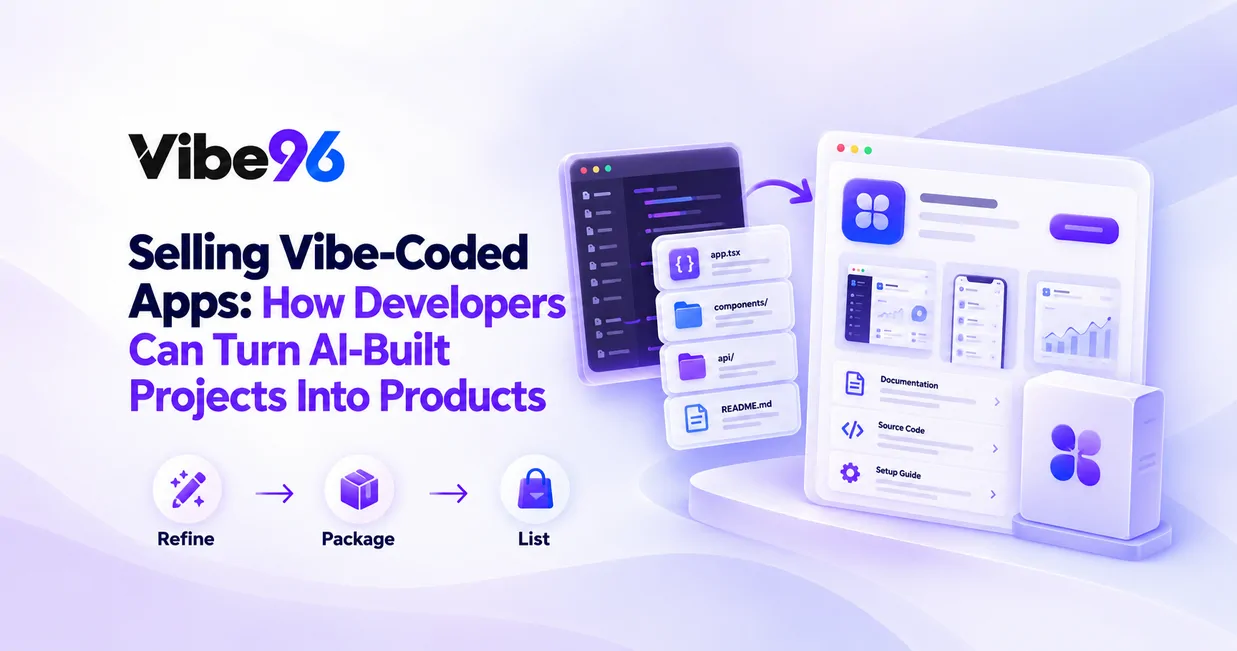
Most of these never go anywhere beyond that folder. Turning one into income is less about having a brilliant idea and more about treating it like a product, which means documentation, a review, and a place to actually list it where buyers are already looking.
This shift in mindset, from personal project to listed product, is usually the single biggest difference between a developer who earns money from vibe coding regularly and one whose work stays private indefinitely. The good news is that most of what separates a private project from a sellable one is process rather than additional engineering, which means it is well within reach of a developer who already has the code working.
From side project to sellable product
The gap between a working prototype and something someone else would pay for is usually smaller than it looks. What is missing is rarely more features. It is more commonly a clear setup guide, a demo that reflects the current version, and evidence that the code has been checked for the obvious problems: exposed secrets, missing error handling, and dependencies nobody has updated in a year or more.
What makes a vibe-coded app sellable
Buyers on any platform to sell coding projects are looking for a few consistent things:
• A working live demo, not just screenshots
• Clear documentation on how to install and run the project
• A defined scope, so the buyer knows exactly what they are and are not getting
• Evidence the code has passed some form of review before listing
• A reasonable, comparable price against similar listings in the same category
Passing a quality review before you list
Most marketplaces that take selling seriously run an audit before a listing goes public, checking for hardcoded credentials, dependency vulnerabilities, access control issues and whether the project actually builds and runs from the documentation provided. This step exists for the buyer's protection, but it also protects sellers: a project that passes a real review is worth more, and attracts fewer refund disputes, than one that was never checked at all and relies purely on trust.
Pricing a vibe-coded app
Pricing is usually the hardest part for a first-time seller. Underpricing devalues the work and the category as a whole; overpricing kills interest before anyone opens the demo. A reasonable approach is to compare against similar listings in the same category, factor in how much setup time the project saves a buyer, and price slightly below what a custom build at that scope would cost through a freelancer, since the buyer is also taking on the risk of integrating someone else's codebase into their own stack.
What buyers expect after the sale
Selling software for sale rarely ends at the transaction. Most marketplaces expect sellers to remain reachable for a support window after purchase and to keep the project reasonably updated if it continues to sell. Setting these expectations clearly in the listing, rather than leaving them implied, avoids most post-sale friction and keeps a seller's reputation intact for future listings.
Building a track record as a seller
A single strong listing can earn money once. A track record of audited, well-documented listings earns a reputation that makes every future listing easier to sell, since buyers increasingly check a seller's history, not just the project in front of them, before deciding to purchase.
Common reasons a listing gets rejected or underperforms
A few recurring issues come up often enough to flag directly:
• Hardcoded secrets or credentials left in the source, which is an automatic audit failure on most marketplaces
• A demo link that is down, outdated, or does not match the screenshots in the listing
• Documentation that assumes the buyer already knows the stack rather than explaining it plainly
• A price set purely by gut feeling rather than by comparing similar, already-listed projects
• A scope that keeps expanding in the listing description, making it unclear exactly what the buyer receives
Fixing these before submitting a listing, rather than after it gets flagged, saves a round trip through the review process and gets a project earning sooner. It is worth running through this list once before every new submission, even for a developer who has listed successfully before, since it is easy to skip a step under time pressure.
Listing more than one project over time
Developers who earn money from vibe coding consistently rarely rely on a single listing. Once a first project is live and selling, the documentation and review process become familiar, and each subsequent listing tends to go faster. Over time, a catalog of a few well-maintained, audited projects can produce steadier income than chasing one standout hit.
Where to list and sell vibe coded apps
A dedicated marketplace handles the parts an individual seller would otherwise have to build themselves: the audit, the payment processing, and the discovery traffic from buyers already looking in a specific category.
Vibe96's Vibe Coded AI App Marketplace listing process walks through the audit requirements and documentation a listing needs before it goes live, with no listing fee to submit a project for review.
Earning money from vibe coding is less about building something nobody has thought of and more about finishing the parts that turn a working prototype into a trustworthy product: documentation, a passed review, and a clear scope. Developers who treat those steps as part of the build, rather than an afterthought, tend to be the ones whose projects actually sell, and keep selling.