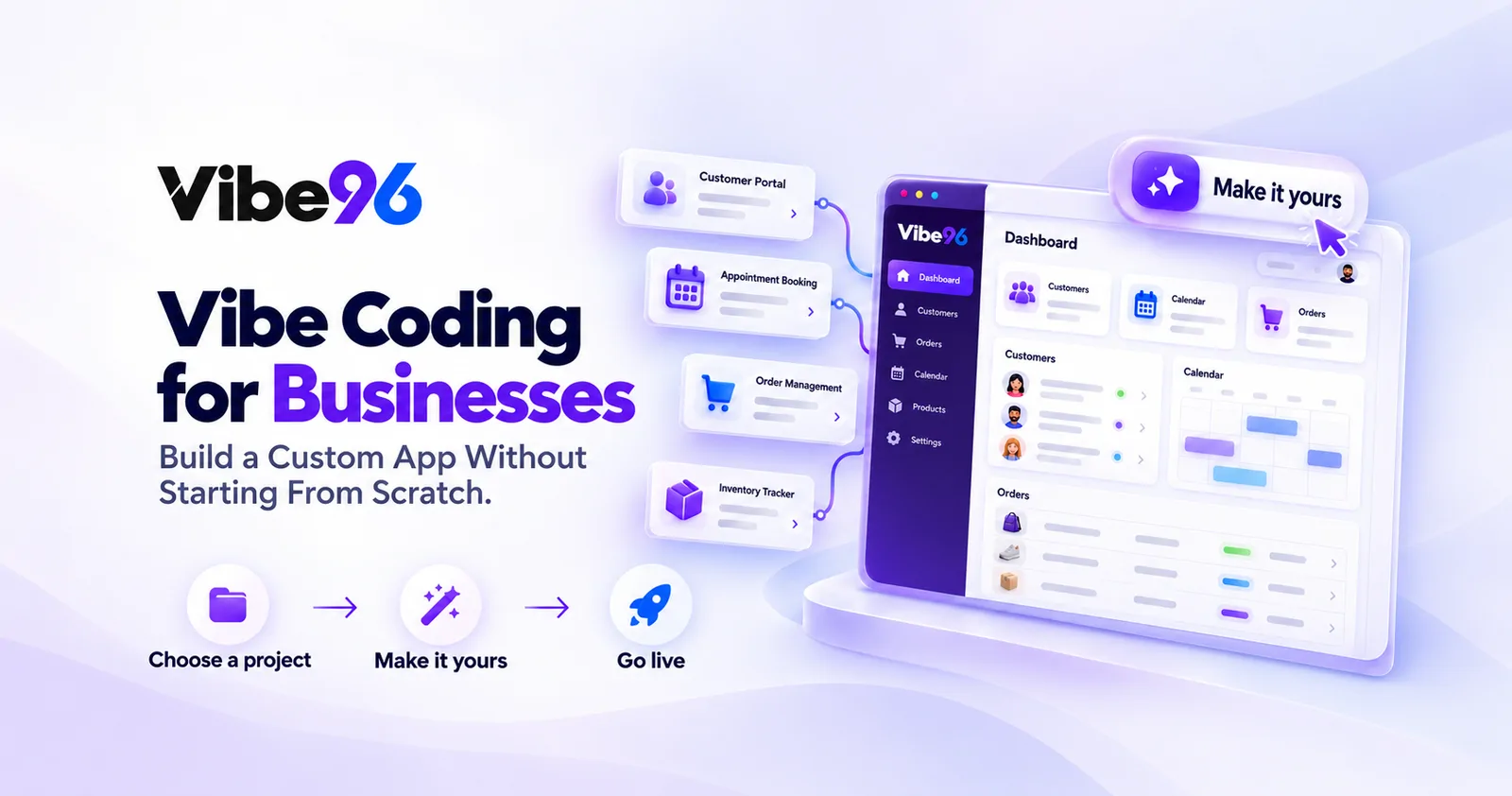
Most businesses that need custom software are not actually looking for something unique. They are looking for something close to a known category, a CRM, a project tracker, a booking system, shaped slightly differently to fit how their team already works.
For this kind of need, starting from a blank prompt with an AI coding tool is rarely the fastest or cheapest path. Buying small business software that already covers the core of the category, then adjusting it, usually is, and the difference in time to launch can be measured in weeks rather than days.
This article walks through why starting from an existing build tends to beat starting from nothing, which categories businesses look for most often, and where the line sits between adjusting a bought project yourself and bringing in a developer.
The problem with starting from a blank prompt
An AI coding tool can produce a first version of almost anything quickly, but speed on day one does not mean speed overall. Someone still has to specify the data model, the permissions, the workflow states and every edge case the business actually encounters, then iterate with the tool until it is right. For well-understood categories like a CRM or a task tracker, most of that specification work has already been done, repeatedly, by every team that built one before, which makes starting fresh a kind of reinvention that rarely pays off.
Starting from an existing, audited build instead
Off the shelf business software from a reviewed marketplace skips the specification phase. The core workflow, contact management in a CRM, task boards in a project tracker, is already built and already tested against real use. What is left is the part that actually differs by business: branding, specific fields, an integration with a tool already in use. That is a much smaller, cheaper problem than building the whole thing from nothing, and it is a problem most teams are already equipped to solve on their own.
Categories businesses look for first
A few categories account for most of the demand from businesses buying rather than building:
• CRM and sales pipeline tools
• Project and task management software
• Invoicing and basic operations tools
• Client portals for agencies managing multiple accounts
• E-commerce and online store platforms
This list is not exhaustive, but it covers the needs that come up repeatedly enough that a reviewed, ready-made listing almost always exists somewhere in one of these categories, rather than requiring a business to be the first to ask for it.
What a business should look for beyond the core features
A listing that handles the obvious workflow correctly is only part of the evaluation. Worth checking alongside it:
• Whether the data model will scale past a handful of test records as the business grows
• How easy it is to export data later, if the business ever needs to switch tools
• Whether multi-user permissions are granular enough for how the team is actually structured
Customizing a bought project to fit your workflow
Once a project is purchased, most of the customization work is incremental rather than structural: adjusting fields, changing a workflow stage, connecting an existing tool like an accounting platform. This kind of work is well within reach of an AI coding tool working on top of an existing, documented codebase, which is a very different task from generating that codebase from nothing, and tends to go far more smoothly as a result.
When a business should still hire a developer
Some changes are not incremental. A payment gateway specific to a region, single sign-on tied to a company's identity provider, or a migration from years of data in an old system are the kind of work where a developer should be involved, regardless of whether the starting point was bought or built. The advantage of starting from a bought, audited project is that these needs are usually clearer and more isolated, which makes the developer engagement shorter and more scoped than it would be against an unfinished, custom-built foundation.
Weighing software you buy against your long-term plans
Before buying, it is worth thinking a step ahead: will this tool still fit in a year, once the team has grown or the workflow has changed. A project bought with the source code included can be adjusted as those needs shift, which is a meaningfully different position from a locked subscription product that only moves in the direction its vendor chooses to take it.
What to compare before choosing a listing
Once a category has been narrowed down, a few practical comparisons tend to matter most:
• Whether the feature set covers your actual workflow, not just the category label
• The stack, and whether it fits your existing team or AI coding tool
• The audit score and any findings tied to the listing
• What support or update commitments come with the purchase
Finding a starting point instead of a blank page
The fastest way to see whether a close-enough starting point already exists is to look through a marketplace organized by business category rather than searching generally.
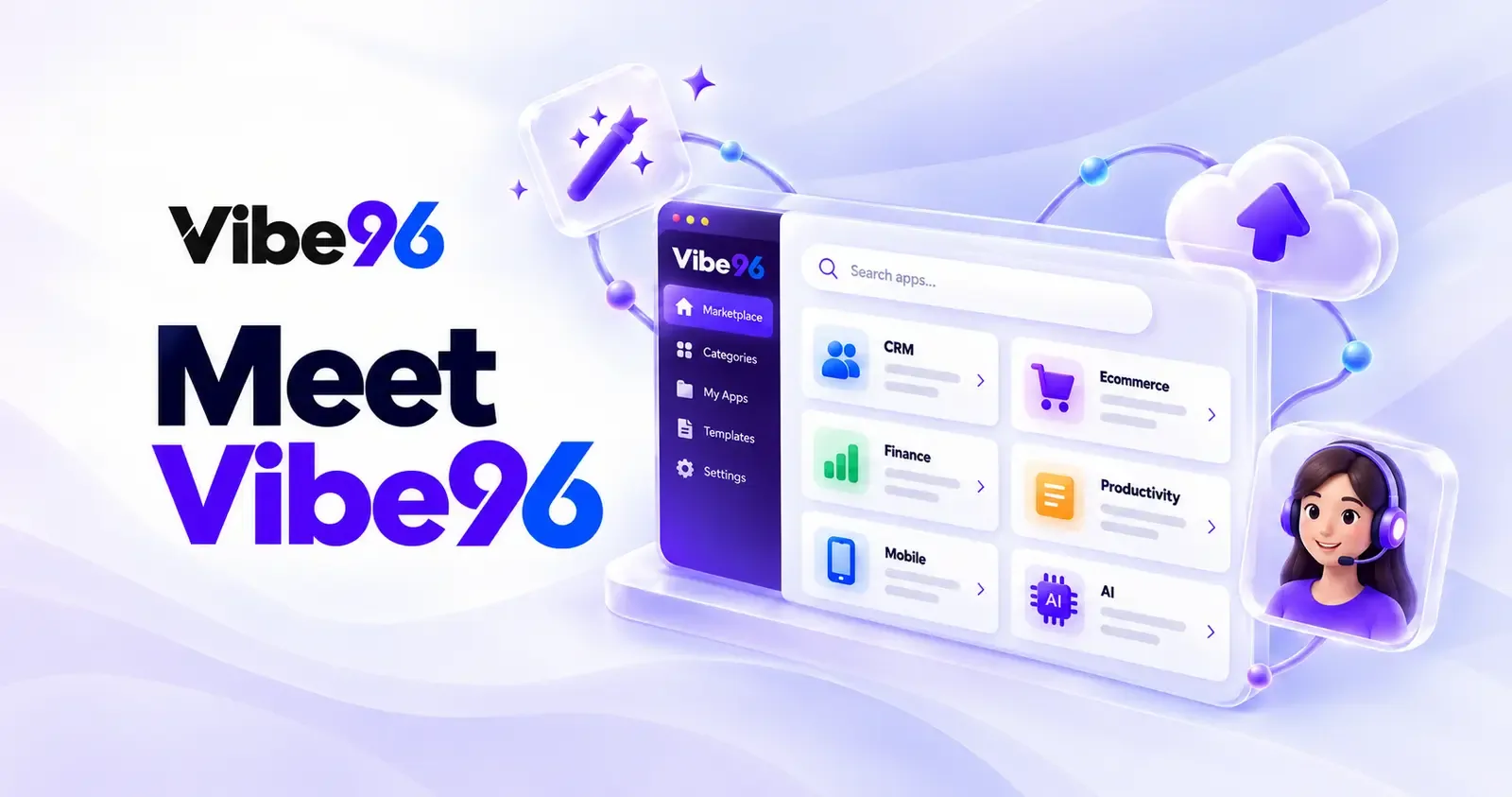
Browsing Vibe96's Vibe Coded AI App Marketplace by category, from Business & Operations to CRM to E-commerce & Retail, is usually a faster first step than opening an AI coding tool and starting from nothing.
Businesses rarely need software nobody has ever built before. They need a known category of software, shaped to their own workflow. Buying an existing, audited build and customizing it from there is usually faster, cheaper and less risky than specifying everything from a blank prompt, and it leaves the harder, more specialized work for the moments that genuinely need it.