A growing number of businesses no longer want to write the first version of their software from scratch. They want something close to what they need, already built, already reviewed, with the option to shape it further rather than starting with nothing.
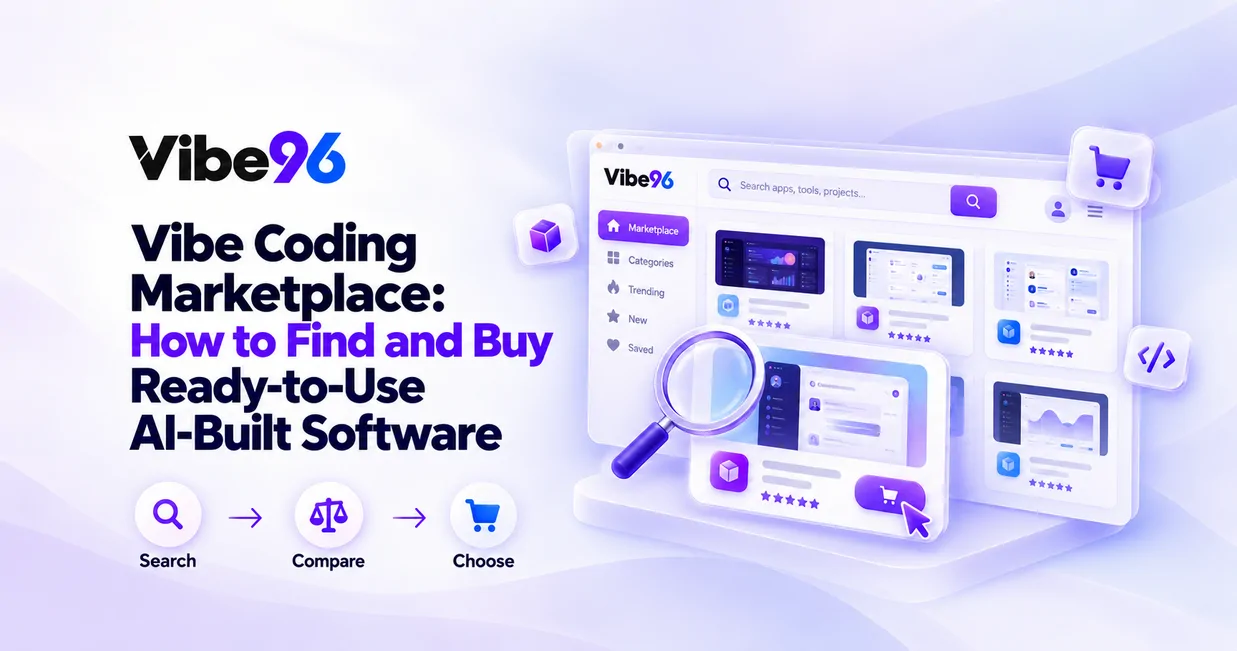
That is the role a vibe coding marketplace plays: a place to browse AI-built software across categories, check how each project was built and reviewed, and buy the ones that fit, with the source code included rather than locked away behind a subscription.
This article covers how an AI app marketplace is organized, what to check before you buy source code online, and what reasonably happens after the purchase goes through, so there are no surprises once the project is actually in your hands. It is written for anyone evaluating this path for the first time, whether that is a founder trying to skip months of development or an operations lead looking for a faster way to stand up an internal tool.
What a vibe coding marketplace actually sells
Unlike a template library or a stock asset site, a vibe coding marketplace deals in full, working applications: CRMs, e-commerce platforms, internal operations tools, AI agents and mobile apps. Each listing typically documents the AI coding tool used to build it, commonly Claude Code, Cursor, Lovable or a similar tool, along with the technology stack, database requirements and a review score, so the buyer is not left guessing about what they are actually purchasing.
Buying from an AI built software marketplace means buying a demoable product rather than a blank starting point, which changes the entire evaluation process compared to hiring someone to build from zero. You can click through the demo, read the review findings, and decide based on what exists today rather than on a promise of what might be delivered in a few weeks.
How to buy source code online without guessing
The practical part of using a marketplace like this is knowing what to check before paying. A short list that applies to almost any listing:
• The stack, and whether your own team or an AI coding tool can maintain it going forward
• The audit or review score, and any open findings listed against the project
• Whether the licence is single-site or allows resale and reuse elsewhere
• What is included and what is not, particularly hosting, support and updates
Browsing by category instead of searching blind
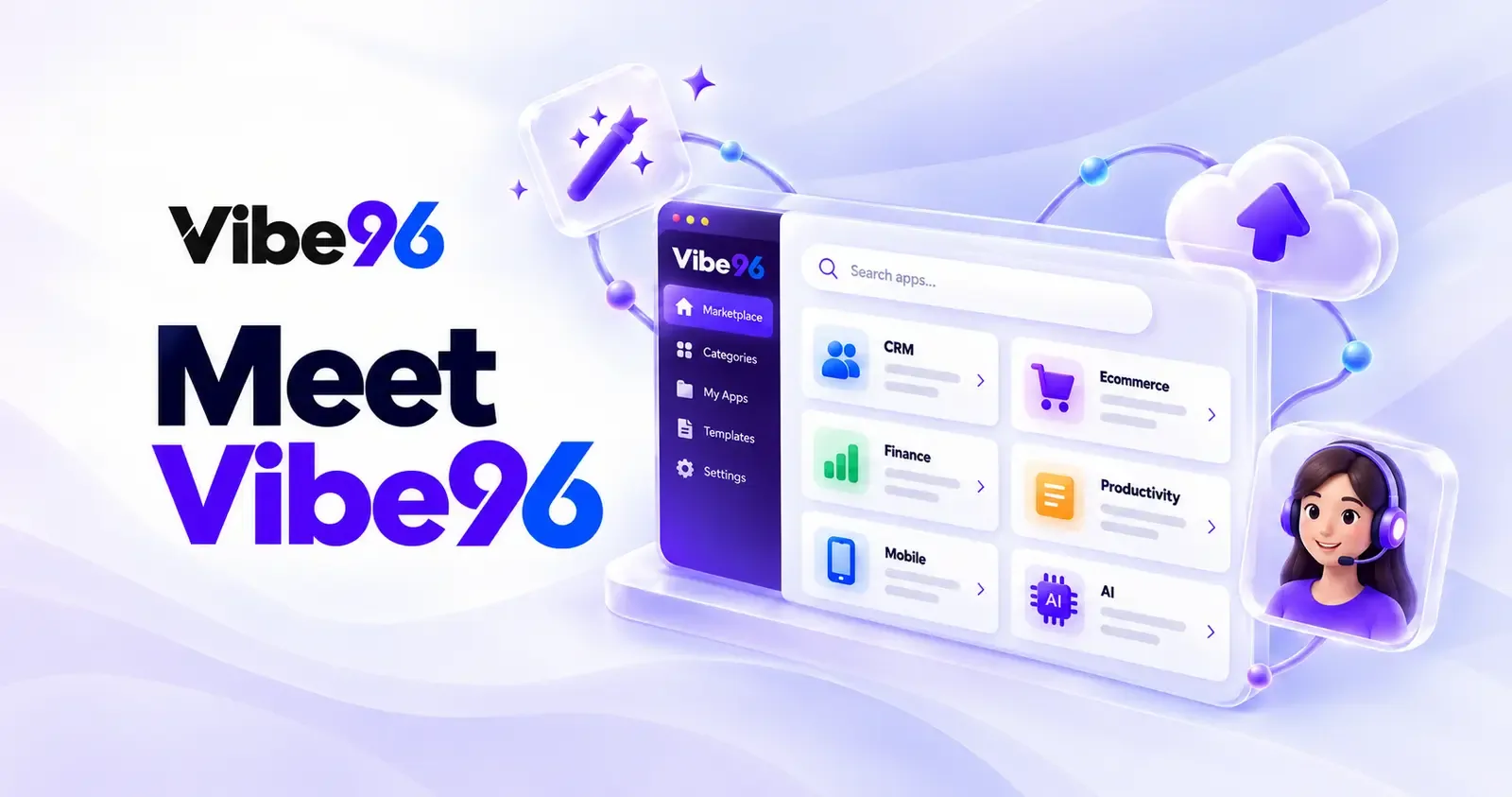
Most marketplaces group listings by category, such as Business & Operations, AI & Automation, E-commerce & Retail, CRM, Sales & Marketing and Mobile Applications. Searching inside a category narrows the comparison to projects built for a similar purpose, which makes it much easier to judge whether a lower-priced listing and a higher-priced one are solving the same problem at a different depth, or solving two different problems entirely that happen to share a label.
It also helps surface options you might not have thought to search for directly. A business looking for a basic invoicing tool might discover a broader operations suite that covers invoicing as one part of a larger workflow, simply because both show up under the same category when browsing rather than searching for an exact keyword match.
What happens after you buy
A marketplace purchase typically includes the source code, a setup guide and a licence. From there, most buyers do one of three things: deploy the project as-is through a hosting service, customize it themselves using an AI coding tool, or bring in a developer for anything that needs specialist attention, such as a payment gateway integration or a data migration from an old system. None of these paths are mutually exclusive, and many buyers move through more than one as the project matures.
Why buying from an audited marketplace matters
Code generated by an AI coding tool can still contain real problems: exposed credentials, missing authorization checks, or untested edge cases that only surface once real users start clicking around in ways nobody anticipated. The value of buying through a reviewed marketplace, rather than an open code-sharing forum, is that someone has already looked for those issues before the listing goes live, and the findings are visible to you as the buyer rather than discovered after the fact, often at the worst possible time.
Common mistakes buyers make on a marketplace
A few habits tend to cause regret after the purchase is already done:
• Judging a listing on screenshots alone, without opening the live demo
• Skipping the audit findings because the overall score looked high
• Assuming hosting is included when it is listed as a separate service
• Buying the first close match instead of comparing two or three listings in the same category
None of these mistakes are hard to avoid once you know to look for them, which is largely the point of treating a marketplace purchase with the same care as any other software decision rather than as an impulse buy.
Comparing listings side by side
Once you have narrowed a category down to two or three candidates, compare them on the same axes rather than on price alone: audit score, stack maturity, how recently the listing was updated, and whether the demo actually reflects the current version. A project with a slightly higher price but a clean audit history and an active changelog is usually the cheaper option once you account for what it would cost to fix problems after the fact, in both time and lost momentum.
Vibe96's Vibe Coded AI App Marketplace shows this information on every listing page, so comparisons like this take minutes rather than a back-and-forth with a seller over email trying to get basic facts about the project.
Buying ready-to-use AI-built software is not about skipping quality, it is about buying quality that has already been checked. A marketplace built around audits, clear documentation and category browsing turns a vague goal like finding something close to what you need into a search you can actually complete in an afternoon, rather than a project that drags on for a quarter while requirements keep shifting underneath it.