A business owner may need a tool without wanting to commission every part from the beginning. An agency may be looking for a suitable base for its next client project. These are different starting points, but they share a need for a practical route forward.
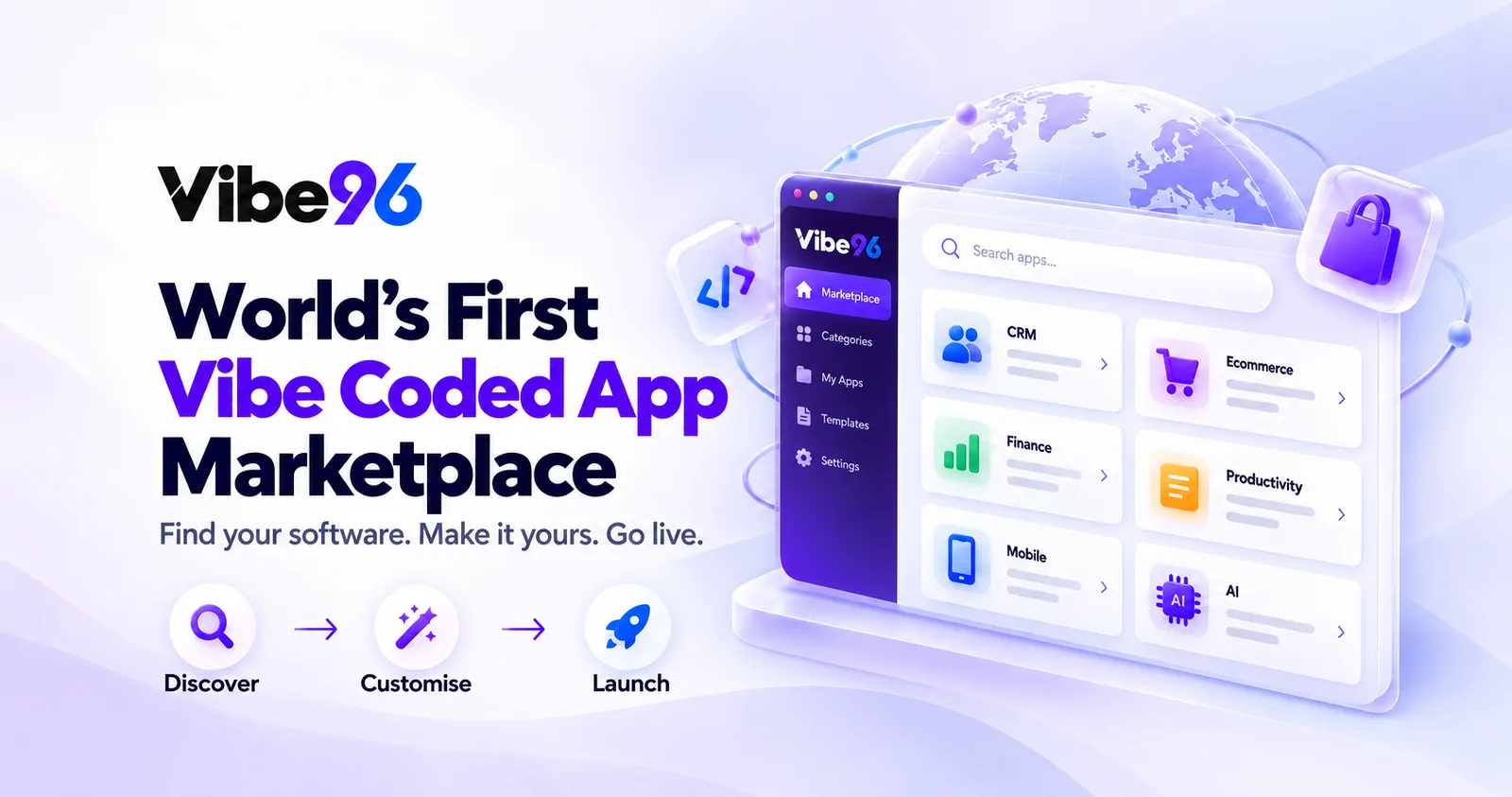
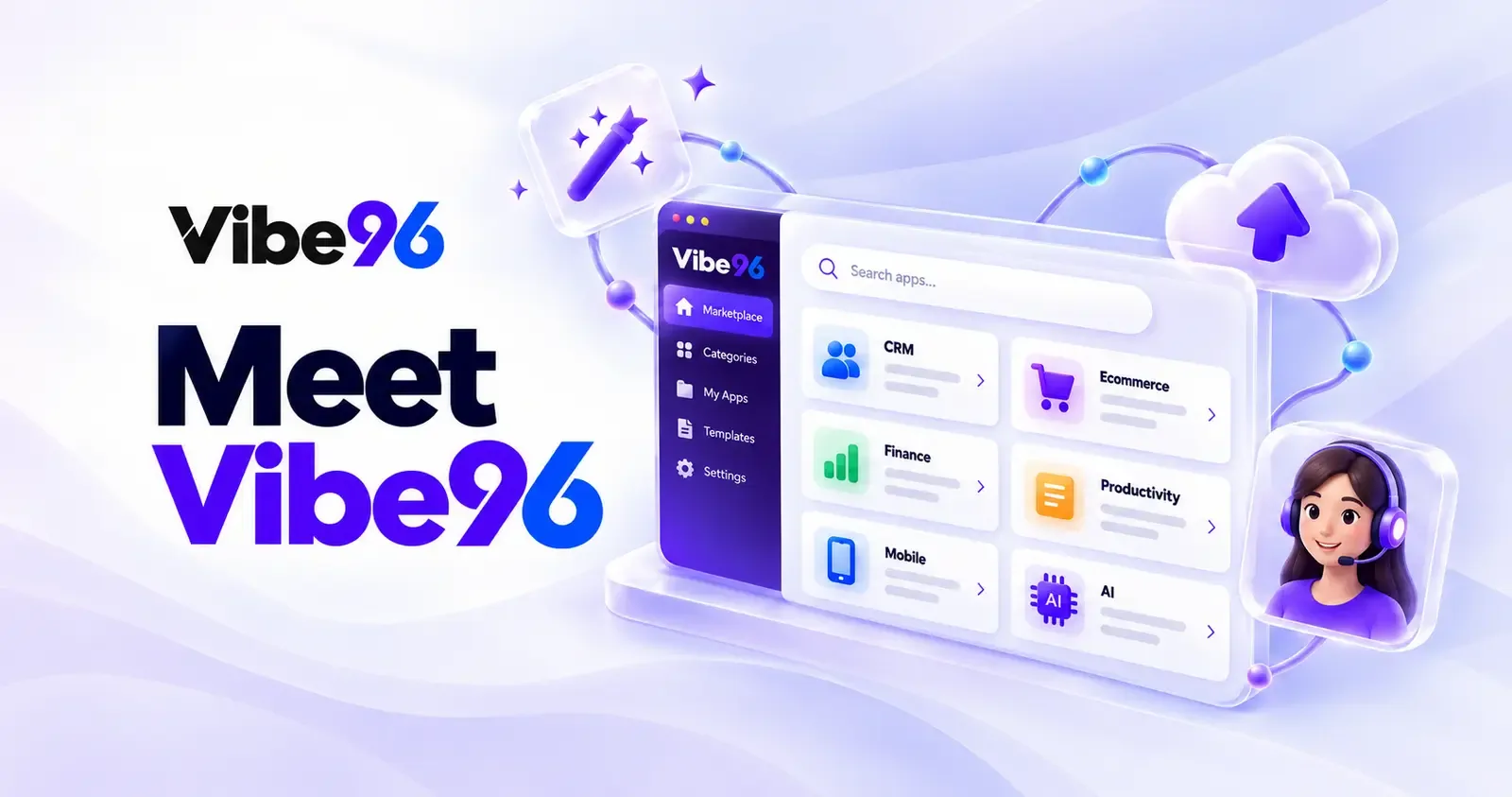
The marketplace is the beginning of that route. Buyers explore products, assess their suitability and decide whether a project fits their requirements. Builders present their work so that another person can understand what it does and what is included. Around that exchange, Vibe96 offers routes to customisation, launch services, hosting and human expertise.
To understand the platform, it helps to follow the work rather than memorise a list of features. What are you trying to achieve? Which parts of the solution already exist? What still needs attention? The answers determine whether your next action is to buy, adapt, deploy, hire help or prepare a product for sale.
What vibe coded software means for a buyer
Vibe coding describes an approach in which people use natural language and AI coding tools to help create or modify software. The label describes part of the building process. It does not, on its own, establish the quality, completeness or suitability of the result.
A useful buyer therefore evaluates the product in front of them. Does its workflow fit the business? Does the demonstration show real functionality? Are the required files and instructions supplied? Can the buyer’s technical team work with the technology? These questions matter regardless of how much of the code was produced with AI assistance.
Vibe96’s role is to help make those products discoverable and connect them with a broader path to use. The marketplace should be approached as a place to evaluate software, not as a reason to skip evaluation. A strong listing gives the buyer enough information to ask better questions and make a more informed decision.
The buyer journey starts with a problem
Suppose a small service business needs to manage customer enquiries, assign work and track progress. Its first task is to describe those activities. It does not need a long specification immediately, but it does need a short account of who will use the application and what they must accomplish.
The buyer can then look for software with a matching core workflow. An application with the right process and a modest interface may be more useful than an attractive product built for a different purpose. Changing a colour scheme is a different undertaking from replacing the way the system assigns work.
During evaluation, the buyer checks the demonstration, included features, technology and documentation. Licence and support information belong in the same review. A purchase should leave the buyer knowing what they may do, what they receive and which parts of the project remain their responsibility.
This process turns browsing into selection. Instead of asking which application looks best, the buyer asks which one provides the most suitable starting point for a defined problem.
Buying does not end the project
An application may be useful as supplied, or it may require adjustments. A company might need its branding, an additional field, a different report or a connection to an external service. Each change should be considered before the buyer promises a delivery date to users or customers.
Start by separating essential changes from optional improvements. An essential change is one without which the intended workflow cannot operate. An optional improvement may make the experience better but can wait until the first version is in use. This distinction protects the budget and keeps the first release understandable.
Technical buyers may choose to work on the source with their existing tools, within the applicable licence. Others may need help with specification, implementation or testing. Vibe Studio introduces an AI-assisted route for working on supported projects, while human experts provide another route for tasks that need specialist attention.
The appropriate route depends on the project and the scope. A platform feature should never be assumed to support every technology or every change without checking its current availability. A clear request and a reviewable result remain important whichever tool performs the work.
Launch services connect software with users
A downloaded project is not necessarily a public application. It needs a suitable environment, configuration and a usable address. Depending on the product, the work may involve a database, file storage, email settings or other services.
Get it Live is the part of the Vibe96 journey concerned with moving a project towards operation. Buyers should prepare the project files or repository, identify the application’s requirements and provide the access needed for the agreed deployment work. The details of the selected service determine what is included.
A useful launch conversation includes the expected audience and workload, not just the operating system. A small internal application may have different needs from a customer-facing service with frequent uploads or scheduled processing. The hosting choice should follow the application rather than the appearance of its dashboard.
Once deployed, the team should check the key journeys at the real address. Logging in is only the beginning. Users need to complete the activities that make the application valuable, and someone needs to confirm that external connections work in the live environment.
Human expertise remains part of the process
AI assistance can make some tasks easier to begin, but software projects still contain decisions that benefit from experience. A developer may need to investigate an unfamiliar error, review permissions or connect a service with unusual requirements. A designer may need to make a complicated workflow understandable.
Hiring help works best when the request is specific. Describe the current behaviour, desired result and relevant constraints. Provide screenshots or examples where they clarify the task. Explain how the finished work will be accepted. This preparation makes a block of expert time more useful.
It also helps to distinguish advice from implementation. You may first need someone to assess whether a project is a suitable base. That assessment can prevent a larger commitment to changes that would be difficult to maintain. Buying a product and hiring an expert are separate decisions, even when they belong to the same overall project.
Vibe96’s combination of marketplace and service routes gives buyers a way to think through those decisions without treating the initial purchase as the last interaction they will need.
The builder journey starts with usefulness
For developers, Vibe96 offers a potential route from completed work to a product listing. The opportunity is broader than publishing whatever an AI tool generated. A buyer needs a solution that is understandable, installable and suitable for a real task.
A builder should start with the problem the application solves. Who is the intended user? What can they accomplish? What does the application deliberately not do? Clear answers make the listing more persuasive and reduce the chance of attracting buyers with incompatible expectations.
Preparation includes checking the application, documenting setup and removing private information. Credentials, customer records and client-owned materials do not belong in a general product package. The builder also needs to confirm that they have the rights to distribute the work and any included components.
A listing then becomes a structured explanation of the product: its purpose, features, demonstration, technical requirements, included files and support boundaries. The easier it is for buyers to understand those details, the easier it is for them to assess whether the product fits.
A marketplace can create a second route for developer work
Many developers earn through individual projects or employment. A reusable software product offers a different commercial possibility: a solution developed for a common problem can be offered to more than one suitable buyer, where the licence permits that model.
That possibility is not the same as guaranteed recurring sales. Builders still need product quality, a relevant audience, a clear listing and capacity to maintain what they sell. Support effort and future improvements belong in the commercial calculation.
The value of a marketplace is that it can bring discovery, evaluation and transaction processes together. Developers can concentrate on creating useful products and explaining them well, while buyers have a place to compare available starting points. Both sides benefit when expectations are specific and the handover is professional.
For an agency, these roles can coexist. The team may buy a suitable application for one client brief and sell a product it independently owns for another audience. The rights and responsibilities of each activity should remain clear.
Choosing your first step
If you are a buyer, write down the workflow you need and the three requirements that matter most. Browse with those requirements in mind. When you find a promising product, check the demonstration, licence, files and setup information before planning changes.
If you are a builder, identify the strongest reusable application in your portfolio. Assess whether another person could install and understand it without your private knowledge. Improve the product package before concentrating on promotional language.
If you have already built something but cannot get it live, describe the current technical state and the part that is blocking progress. A precise problem is easier to assess than a general request to rescue a project.
Vibe96 brings these situations into a shared software journey. Its purpose is to help useful applications move beyond their original creator and towards people who can put them to work. Begin with the task you need to complete, then use the marketplace and available services to choose a practical next step.