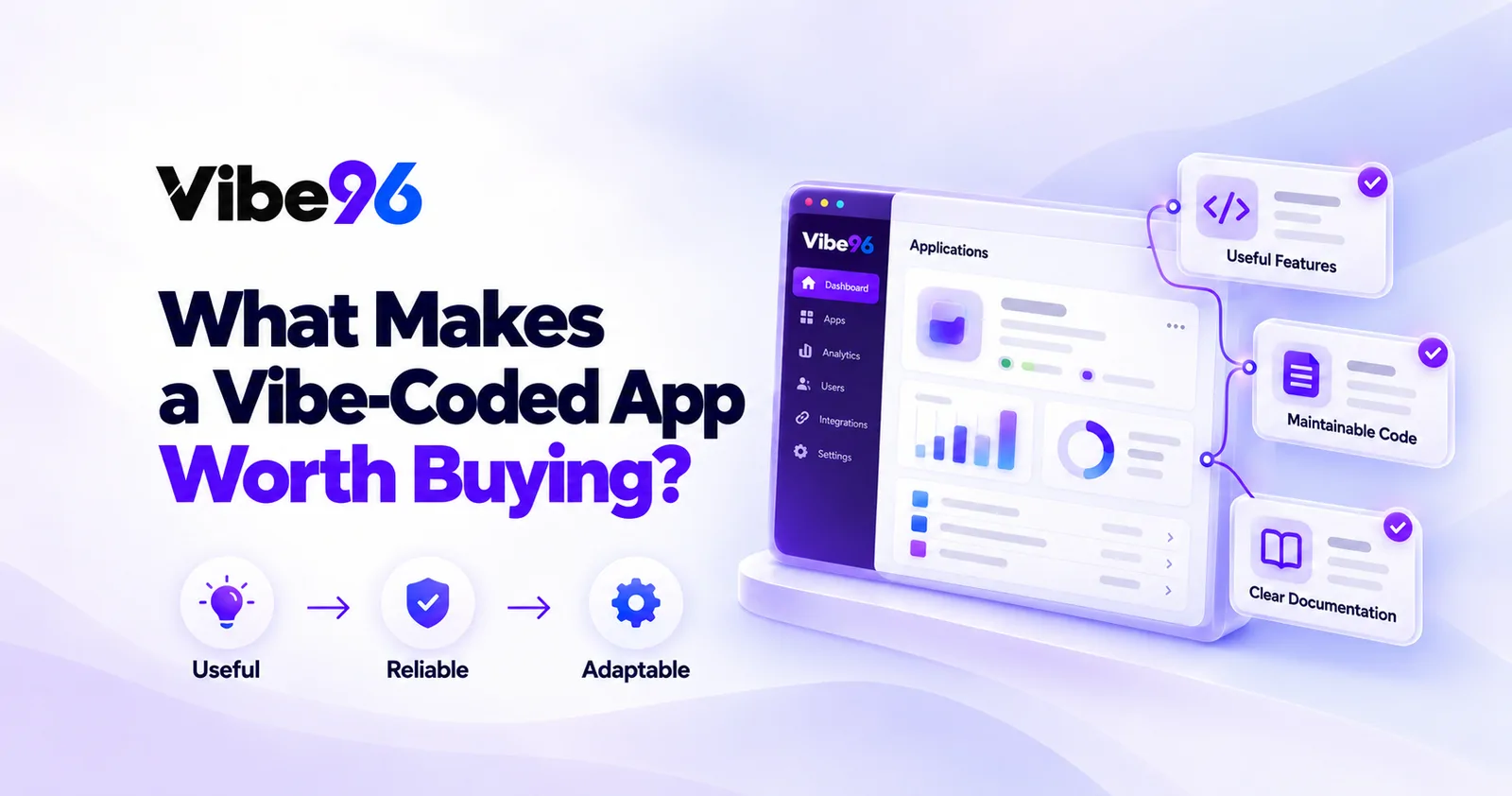
Not every vibe-coded listing is worth the asking price, and the difference rarely shows up in the screenshots. The question of whether is vibe coded software safe to buy comes down to a handful of concrete signals: whether it was actually reviewed, whether the documentation matches reality, and whether the terms you are buying under are clearly stated rather than left vague for you to discover later.
None of these signals require technical expertise to check. They require knowing what to look for, and knowing to look at all before the purchase rather than after. This matters whether the purchase is a fifty dollar utility or a project meant to anchor a new business line, since the review steps involved cost the same handful of minutes either way.
It starts with the audit, not the screenshots
A polished demo says very little about what is happening underneath. An AI code audit service that checks for exposed credentials, vulnerable dependencies and access control issues says a great deal more, because it tests the parts of the application a screenshot cannot show. A listing worth buying will show this information plainly rather than require you to ask for it, since a seller confident in their audit result generally has no reason to hide it.
Documentation that actually explains the build
Source code without a working setup guide is a liability, not an asset. A worthwhile listing documents the stack, the environment variables needed, how to run the project locally, and ideally how it was deployed. This matters more, not less, for AI-built projects, since there is no original developer you can casually message with a question the way you might with a freelancer you hired directly.
A stack your team, or your AI tool, can work with
The best audit score in the world does not help if nobody on your team, and no AI coding tool you have access to, can comfortably work in the project's stack. Worth checking before anything else: what language, framework and database the project uses, and whether that matches what you already have, or plan to have, available on your side.
Clear licence and support terms
A listing worth buying states its licence plainly: single-site use, whether modification is allowed, whether resale is permitted. It also states what support, if any, comes with the purchase, and for how long. Vague or missing terms here are a signal to ask questions before paying, not after, since these are the terms you are bound to once the purchase is complete.
Signs a listing was audited loosely
A few patterns suggest a code quality audit for AI generated code was done quickly, or not meaningfully at all:
• A high score with no visible detail on what was actually checked
• No mention of the AI coding tool or stack used to build the project
• A demo that clearly differs from the screenshots or description
• No stated licence terms, or terms that contradict each other across the listing
• No update history, suggesting the project has not been touched since it was first listed
None of these signs are automatically disqualifying on their own, but two or three of them appearing together on the same listing is usually enough reason to look elsewhere rather than hope for the best.
How this differs from evaluating a SaaS subscription
A SaaS product is maintained by its vendor for as long as you pay the subscription, and you never see the underlying code. A purchased vibe-coded app puts that responsibility on you, in exchange for ownership and the ability to change anything about it. That trade only pays off if the code you receive is actually in a state worth owning, which is exactly what the audit, documentation and licence terms are there to establish before you commit.
Why this matters more for AI-built projects specifically
With a traditionally built application, a buyer could at least ask who the original developer was and check their track record. With an AI-built project, that signal is largely absent, since the tool itself has no reputation to vouch for and no accountability for what it produced. The audit and documentation effectively replace that missing signal, which is exactly why they matter more here than they might for software built the conventional way.
A simple test before you commit to a purchase
If a listing cannot answer these plainly, treat that as a reason to look elsewhere rather than assume the best:
• What exactly did the audit check, and what was the result
• What AI coding tool and stack was the project built with
• What does the licence allow, and what does it not allow
• Is there a working demo that matches the current version being sold
Where to find apps that already clear this bar
Rather than evaluating every signal above manually for each listing you consider, buying from a marketplace that standardizes this information across every project saves most of the effort and most of the risk.
Vibe96's Vibe Coded AI App Marketplace requires every listing to carry an audit score, documented stack and clear licence terms before it goes live, which is as close as a buyer can get to a reliable default rather than a case-by-case gamble on every purchase.
What makes a vibe-coded app worth buying is rarely the idea behind it. It is whether the project was actually audited, documented honestly, built on a stack you can work with, and sold under terms that are stated rather than implied. Checking those four things before paying catches most of the difference between a good purchase and a costly one.